

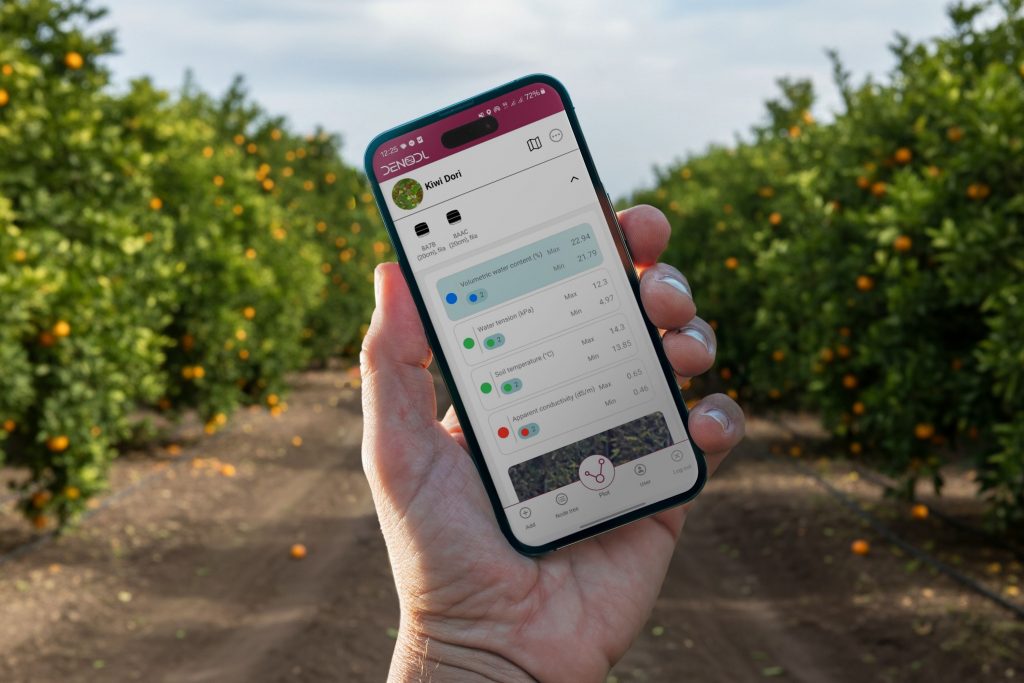
Our Measurements: Soil Temperature | Volumetric Water Content (VWC) | Apparent Soil Electrical Conductivity (ECa) | Soil Water Potential | Pore Water Electrical Conductivity (Pore Water EC)

DUAL-DEPTH MEASUREMENT

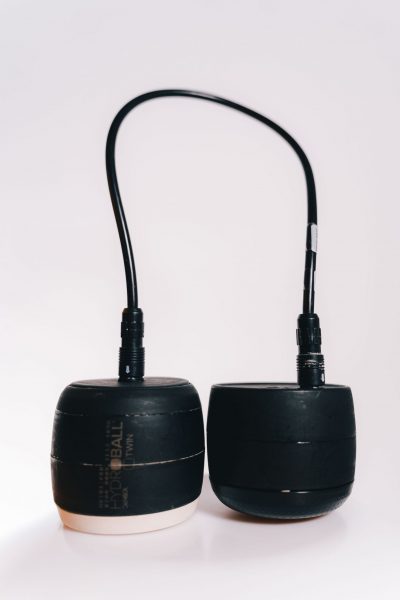
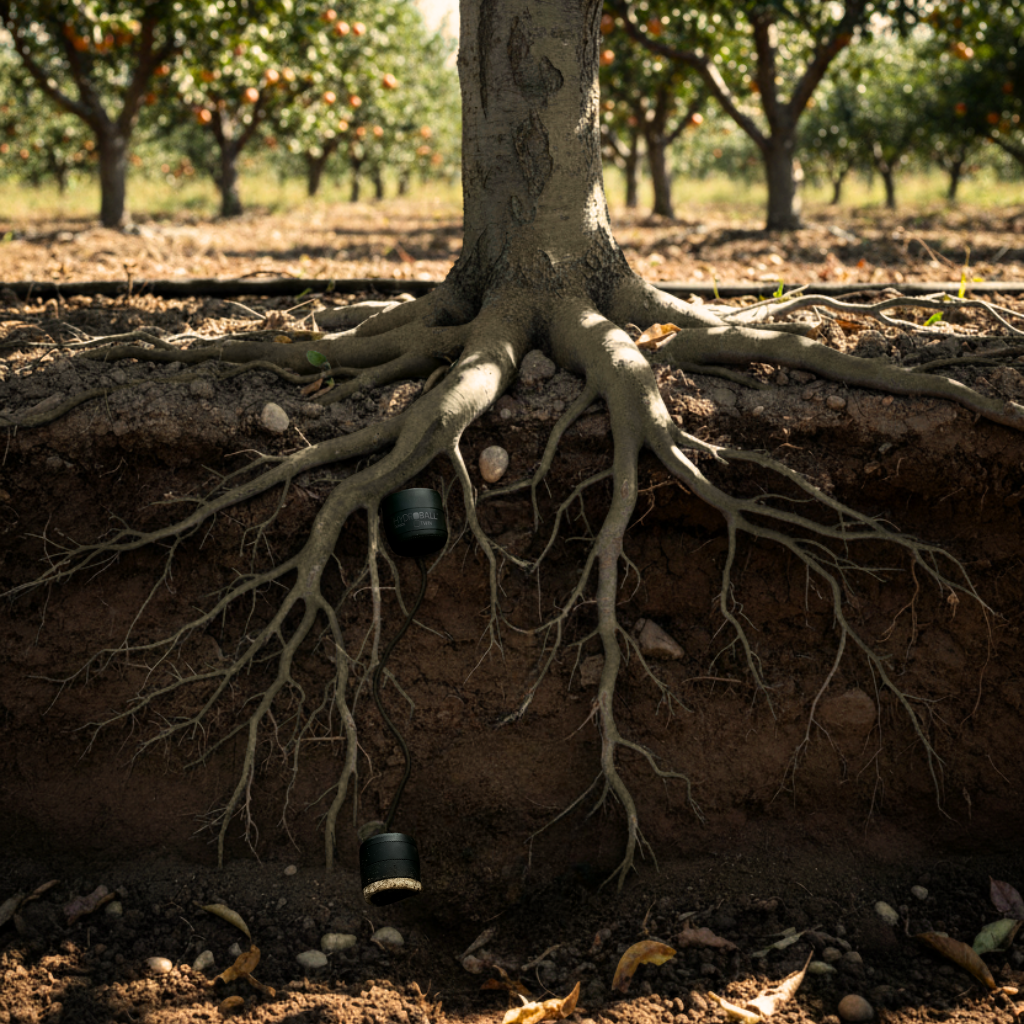
HYDROBALL®TWIN splits the functionalities of HYDROBALL® into two units connected by cable. The upper module, responsible for measurement, control, data transmission, and power supply, can be positioned above the soil surface, enhancing connectivity in any environment. The lower module, installed at the required depth, contains the sensors that measure the following parameters: volumetric water content, water tension, apparent electrical conductivity, soil temperature, and — as a new feature — pore water electrical conductivity.

hbtwin vertical

HYDROBALL®TWIN has been designed to meet the specific needs of woody crop producers, offering an optimal solution for monitoring soil water status at greater depths. This design allows for battery replacement without removing the device from the ground and provides two measurement points at different depths.

HYDROBALL®TWIN PLUS

HYDROBALL®TWIN PLUS offers dual-depth measurement in a single device, with sensors in both units that allow monitoring at two different depths — up to 2 meters. Its installation is simple and helps optimize operational costs thanks to its multi-level and autonomous design.

SOIL WATER RETENTION CURVE


At the Digital Twin Management Unit level, an Agronomic Analysis section is available.

This section displays the soil water retention curve for each monitored location. The curve represents the relationship between soil water content (Volumetric Water Content, %) and matric potential (Water Potential, kPa), providing valuable information about the soil’s ability to retain water.

Additionally, this section allows you to compare your soil’s water retention curve with the twelve standardized USDA soil curves, classified according to their texture. It also provides the theoretical soil water retention parameters, including Saturation Point, Field Capacity, Refill Point, and Permanent Wilting Point.

In other words, you can compare your soil’s water retention capacity with that of the twelve standardized USDA soil types. This enables you to estimate the theoretical Volumetric Water Content (%) corresponding to the Saturation Point, Field Capacity, Refill Point, and Permanent Wilting Point, helping you better understand your soil’s water dynamics and optimize irrigation management.

Scroll to Top